Bein Sports and Martial Arts for Kodi 173 Free Download

Empowering Local Practitioners to Collect and Written report on Anthropogenic Riverine and Marine Droppings Using Inexpensive Methods in Republic of india
by 1,*  , 2 , 3 , 4 , ii , 2 , 2 , five , 5 , half dozen , six , 7 , 8 , 9 , 10 and eleven
1
Department of Politics, Economic science, and International Studies, University of Hartford, Due west Hartford, CT 06112, United states
2
Department of Environmental Sciences, University of Kerala, Thiruvananthapuram 695581, Kerala, Bharat
3
Toulan School of Urban Studies, Portland State Academy, Portland, OR 97201, The states
4
Department of Zoology, Madras Christian College, Chennai 600059, Tamil Nadu, India
5
Department of Environmental Sciences, All Saints' College, Thiruvananthapuram 695007, Kerala, India
6
Centre for Activity Inquiry on Environs Science and Lodge (CARESS), Chennai 600094, Tamil Nadu, India
seven
Section of Science and Humanities, K. J. Somaiaya Higher of Engineering, Mumbai 400077, Maharashtra, Republic of india
8
Section of Zoology, B.Due north.Due north. Higher, Bhiwandi 421302, Maharashtra, India
ix
Department of Ocean Studies and Marine Biology, Pondicherry Academy Off Campus, Brookshabad, Port Blair 605014, Andamans, India
10
Center of Advanced Study in Marine Biology, Annamalai University, Parangipettai 608502, Tamil Nadu, India
*
Author to whom correspondence should exist addressed.
Academic Editors: Junfeng Ma, Eric Sparks, Caitlin Wessel and Tim Gray
Received: 28 Oct 2021 / Revised: 22 January 2022 / Accustomed: 1 February 2022 / Published: 8 February 2022
Abstract
This article includes a review of the literature on marine debris in an Indian context and introduces a replicable, scientific, and inexpensive collection method to build chapters and inform policymakers. We share baseline data resulting from ten cleanups using these methods in Republic of india. This method was introduced in a 2019 workshop to train Indian researchers, leading to local-led collections in 3 states and two Spousal relationship Territories (viii beaches, 2 riversides) yielding 33,474 private pieces of debris weighing a total of 599.15 kg. Plastic was the well-nigh frequently found cloth at all x collection sites, comprising from 45% to 89% of all items found. The research establishes a baseline data collection at ten locations, with debris density at sites ranging from 0.38–3.86 items/yardtwo. Application of the Clean Coast Index yields resulting rankings of moderate (1 site), dirty (two sites), and extremely dirty (7 sites). Researchers also identified 2461 brands in analysis at six sites, 76% of which were Indian in origin. Replication of the methods in other Indian regions among the community of 30-iii practitioners was beneath target for collection (41%) and brand audit (8.three%) with 25% of teams sharing data with the community of practitioners and 12.5% sharing results with local policymakers. The analysis indicates debris is overwhelmingly composed of plastic from residential activities. The methods empower practitioners to collect and report on debris, ground-truthing global debris estimates, and illuminating the missing plastic problem.
one. Introduction
Several decades of research signal the significant bear upon of marine litter to water, wildlife, ecosystems, and the economy [1,2,3,4,five,6,7,8,9,ten,11]. S and East Asia are oftentimes described as prime number contributors to the world's litter, due to dense populations living at the subsistence level, dependence on inexpensive single-use plastics, and little waste matter infrastructure [12,xiii,14]. India is of particular importance to the result, as it has a coastline of nearly 7500 km, touching three seas and several major river systems, including the Ganga and Indus. Though Indian rivers are sacred both culturally and religiously, they are frequently littered. Based on their work cataloging plastics in the early 2000s in India, Sridhar et al. recommend further studies to pinpoint "quantity and quality of small plastic droppings on intertidal zones" and a focus on "origin, transport and deposition" [15]. By 2016, Kumar and Sivakumar declared marine droppings the "global problem to the lowest degree studied in Republic of india," and chosen for increased monitoring and evaluation [16]. This article introduces a replicable, scientific, inexpensive collection method for Indian marine debris inquiry capacity building, and shares baseline data from ten cleanups to inform the trouble of litter in Republic of india.
The authors held a week-long grooming workshop in Thiruvananthapuram, India in June 2019, with goals of augmenting local capacity for marine droppings research; enriching empirical information; characterizing sources of droppings; and sharing results with policymakers. This article reviews the literature on debris in India, outlines the workshop methods, and reports on data from x collections in Kerala (iv), Maharashtra (ii), the Union Territory of Andaman and Nicobar Islands (1), Tamil Nadu (two), and the Union Territory of Lakshadweep (1); including categorization to determine sources, brand data, calculation of average density per square meter, Clean Coastal Index ranking, and completion rates for workshop participants.
Why promote ground-truthing macro debris estimates in developing countries? Researchers recommend focusing efforts on such communities, noting the importance of focusing on the world'due south most polluted rivers in countries characterized by swiftly developing economies and a lack of waste infrastructure [17]; that capture local deposition and intervene before it reaches the ocean [18]; that are positioned near high-density littoral regions [xix]; and that concentrate on macro droppings from consumer households [twenty]. In fact, Blettler and Wantzen depict the emphasis on microplastics in freshwater (imported from the developed world) as a form of scientific imperialism [twenty], whereas macroplastics should be of more concern in the developing world due to the lack of waste management. Supporting inquiry on macro debris on Indian shores illuminates the story of waste in the developing earth, establishing a baseline in local communities and informing policymakers, advocates, and practitioners.
two. Literature Review
There are many studies focusing on regional litter in Asia; such studies draw an increasingly uncontrollable situation [21] with high rates of micro and macro-plastic aggregating [22]; they detail collections of tens of thousands of pieces [23]; and reveal debris that has travelled from southeast Asia, south asia, and Africa [23,24] even at times forcing fishermen to work against their best economic interests past avoiding preferred fishing sites [25]. Economists estimate marine litter to cost 1.28 billion USD per twelvemonth (as calculated in 2008 dollars) across the 21 Asia-Pacific economies [26]. These costs, realized by the tourism, aircraft, and fishing industries, stem from shoreline cleaning, line-fishing and shipping vessel damage tracked through insurance claim and repair data, and the removal of derelict fishing gear [26].
Equally a region with high population living at the subsistence level, heavy dependence on plastic packaging, and little waste infrastructure, Asia is frequently flagged as a prime number correspondent to the world'southward marine litter [12,13,14]. An Ocean Conservancy report names China, Indonesia, the Philippines, Thailand, and Vietnam as the greatest contributors of marine litter by volume [27]. Notably, data reveal that India contributes to marine debris in the top five, just the report creators highlight the due east Asian countries as the acme five with "geographic proximity" [27]. In 2016, S Asia inputs to waste accumulation totaled 334 million tons, or an average 0.52 kg per person per solar day [28]. This number is expected to increase by 2025 [13] and double regionally by 2050 [28]. These conditions will be exacerbated by growing population trends and increasing development [28,29]. Blettler et al. note that many of the most polluted rivers tin can be found in Asia, yet a mere 14% of peer-reviewed studies stem from these important inland fisheries [17].
Here, nosotros review the early literature on debris in India to establish context for this research. Studies on droppings in India began with evidence in the early on 1980s from Caranzalem Beach, Goa, on plastic pellets—as well known as nurdles—ranging in density from fifty–300 pieces/yard2 [30]. The author described a nearby Corlim Industrial Manor equally the likely source, presciently noting "…their non-degradable nature and continuous accumulation may evidence to be an ecology hazard in time to come" [30]. The next studies on droppings aggregating appeared in the early on 2000s. Dharani et al. shared anecdotal prove from Neat Nicobar Isle of the accumulation of substantial shoreline debris of non-local origin [31]. In evaluating the environmental pollution of the Alang-Sosiya shipyard in Gujarat, researchers found plastics represent 81.43 mg/kg in sediment samples, including "thermocol, Styrofoam, nylon, transparent plastics, colored plastics, and glass wool" attributed to shipbreaking [32]. Research of v sites in Karnataka revealed plastic abundance ranges from six.9 to 37.9 m/mtwo past weight, recommending farther studies, public instruction, plastic alternatives, and better disposal [15].
Past the 2010s, the pace of research on debris in Bharat increased speedily. Duraisamy and Latha, working in Ennore port, Chennai, Tamil Nadu described anecdotal observations of "solid waste matter dumping [and] windblown droppings," attributed to population, bank encroachment, and sewer discharge [33]. Ganesapandian et al., collecting debris over 2 years from beaches on the Gulf of Mannar, most frequently found plastic (48%), polystyrene (eighteen%), and textile (15%), attributing the litter to fishing, tourism, and sewage [34]. Kaladharan et al. sampled beaches, trawling hauls, and water over two years at viii sites in half dozen Indian states finding "considerable quantities" of plastic ropes, pet bottles, sachets, milk covers and thin carry bags on beaches (0.145–9.8 g/mtwo) and line-fishing grounds (32–85 g/booty) [35]. Describing the overwhelmingly negative consequences of sand mining, mangrove devastation, and plastic pollution on these coastal fishing areas, the authors recommend farther study [35]. Jayasiri et al. studied iv beaches in Mumbai over eleven months, nearly oft finding plastic, with a mean abundance of seven.49 g and 68.83 items/m2 in sediment samples and of 3.24 k and eleven.6 items/mii for visible debris [36,37]. These researchers recorded significant variation across both time and infinite, attributing plastic contamination to "recreation, tourism, and religious activities" [37] and "consumer and household… materials" as well as "fishing, boating, pharmaceuticals and manufacturing" [36]. Sampling monthly over two years from 2010–2012 at four sites in Karnataka, Sulochanan et al. almost frequently found nylon and plastic ropes [38]. The hateful density of reported debris was 233.86 ± 375.01 g/m2 and 24.iii ± 25.5 items/chiliad2 (Thanneerbhavi), 141.7 ± 138.9 thousand/mtwo and 19.46 ± 15.57 items/m2 (Panambur), and 420.11 ± 743.07 chiliad/m2 and 20.73 ± eighteen.72 items/mii (Chithrapur) [38]. The researchers recognized a human relationship between abundance and proximity to discharge from the nearby Nethravathi and Gurupur rivers [38]. Working in Chennai, Veerasingam et al. sampled plastic nurdles along the high tide line, comparing pre- and post-flood levels [39]. The researchers institute 3 times the number of pellets in the post-flooding sample (primarily polyethylene and polypropylene), attributable to influence of nearby rivers [39]. In research on nurdles at six sites in Goa, Veerasingam et al. reported polyethylene and polypropylene as the well-nigh abundant types, final southwest monsoons ship new micro plastic pellets to Goan beaches where they degrade [40]. Working on Marina beach, Chennai, Kumar et al. found 6872 individual pieces (129.vii kg) near of which was plastic (44.9%) including plastic bags, food wrappers and plastic cups [41]. They noted local recreation or land-based sources and recommended longer and larger-calibration monitoring [41]. Kaladharan et al. evaluated 254 sites along all of xi states of coastal Republic of india, determining plastics were the 'largest component" in their collections [42]. 50-one of the 254 beaches they surveyed were graded very clean (<ane 1000/one thousandii), 122 were rated clean (1.1–10 g/m2), 30-six were considered fair (10.1–20 one thousand/mtwo), seventeen were graded moderate (xx.1–50 k/m2), seven were rated littered (50.1–100 g/mtwo) and twenty-1 beaches were heavily littered (>100 one thousand/thousand2). The authors attributed debris levels to coastal urbanization, tourism, plastic packaging, and mobile phone use; they recommend didactics and legislation to combat the problem [42]. Evaluating microplastics in Vembanad Lake, Kerala, Sruthy and Ramasamy discovered microplastics in all of their sediment samples, computing a hateful abundance of 252.80 particles/mii with low-density polyethylene found well-nigh frequently and attributed to deposition of disposed items; the authors recommend prevention to alleviate the problem [43]. In the Gulf of Mannar, Vidyasakar et al. Noticed that their samples dominated by "polypropylene… followed by polyethylene, polystyrene, nylon and polyvinyl chloride," attributing this pollution to tourism and fishing [44]. Karthik et al., sampling microplastics at twenty-five sandy beaches across Tamil Nadu, plant high tide line microplastic mean affluence was 1323 ± 1228 mg/m2 compared to 178 ± 261 mg/m2 at the low tide line; microplastics were found at highest density at beaches next to rivers, indicating land-based sources [45]. The nearly often found microplastics were polyethylene and polypropylene; authors recommend additional comprehensive studies that take into account human action, processes, pathways, and seasonality [45]. Assessing macro and micro debris on Nallathanni Island, Gulf of Mannar, Krishnakumar et al. found plastic made up 73.ii–100% of their samples, attributable to everyday consumer products (e.1000., nutrient, drink, wellness items) and angling (due east.1000., nylon and polystyrene) [46]. Priya and Varunprasath surveyed 88 wetlands in Tiruppur district, Tamil Nadu, over ten months noting 44% of their sites had non-degradable waste (plastics) and 52% contained mixed waste product including hazardous and nuclear waste [47]. To amend conserve wetlands, they recommend public fora with representatives from instruction, research, and NGOs as well as locals [47]. Working in the Lakshadweep Archipelago, Joy et al. revealed contagion attributed to "anthropogenic pressure level and developmental activities" including "diesel-based ability generation, shipping activities, sewage sludge, plastic materials, fertilizers, construction, tourism activities, petroleum products, paints and pigments used in plastics, garbage and phosphate fertilizers" and noticed cadmium seriously threatens this reef ecosystem [48].
Inquiry on debris in Bharat seems probable to increase throughout the 2020s. Manickavasagam et al. working in South Juhu Creek, Mumbai quantified and analyzed debris flow through a channel, with mean results every bit 111 ± 5 pieces for loftier tide compared to 184 ± 12 pieces for low tide while the mean weights were seven.1305 ± 0.551 kg for high tide and 13.964 ± 1.234 kg for depression tide [49]. Their work indicates a meaning amount of material, mostly plastic, flows from high population areas through the channel to the sea, peculiarly at low tide and chiefly including macro and mega plastic waste material [49]. Daniel, Thomas and Thomson collected data from half dozen beaches in Kerala, finding most waste was plastic, amounting to 73.viii% by count and 59.9% past weight [50]. The authors found the concentration of fishing-related plastic was four times greater on loftier intensity fishing beaches and that fishing-related plastic increased after monsoons; they recommend fishing customs pedagogy and amend drove of used and derelict line-fishing gear [fifty]. Assessing 21 islands of the Gulf of Mannar, Edward et al. revealed that, bulk of the waste product was abandoned fishing nets (43.17 ± 5.48%), dissentious coral of the genera Acropora and Montipora [51]. They noted the critical function of reefs to the livelihoods of fishing communities, recommending management, debris reduction or elimination, monitoring, research, reduced fishing, gear maintenance, reef demarcation, outreach almost ghost gear, removal and recycling of debris, education, aquaculture, bogus reefs, and solid waste management in nearby cities to alleviate the trouble [51]. Focusing on abandoned, lost, or otherwise discarded fishing gear (ALDFG) along the length of the Ganga, Nelms et al. found 701 pieces of gear, including string (41%), net (40%), rope (10%), float (8%) and line (0.4%) for an average density of 0.013 (±0.038) items/one thousandtwo [52]. The results indicated gear is not used for long; good disposal procedures do not exist; and regulations may be inadequate [52]. Furthermore, working along the length of the Ganga, Napper et al. found 140 microplastic particles in xx samples of 10 sites, noting concentration was higher pre-monsoon and fibers were most prominent [53]. The researchers estimated that the Ganga, the Brahmaputra and the Meghna rivers may collectively release 1–3 billion particles into the Bay of Bengal daily [53].
While the methodologies employed vary greatly every bit determined by the goals of each study, this research indicates plastic pollution has grown as an environmental trouble in Indian freshwater and coastal systems over time. As shown in the review, debris in India has been attributed to a wide range of sources and recommendations vary according to the study. The investigation of debris in India has become more frequent and belittling over the past four decades; and yet, these studies just skim the surface of the problem when because the geographical calibration of India and the importance researchers accept placed on south asia equally a top polluting region.
The methods in this article provide baseline studies—information technology should be noted that without baseline studies, increasing waste degrades these ecologies without awareness of that which is existence lost, an example of shifting baseline syndrome [54]. The methodology, when applied more broadly, tin can let for more baseline studies along Bharat'due south ample coastline, increasing and augmenting data on the types of droppings, sources, and contextual direction over time. In addition, such work highlights means anthropogenic marine litter can be addressed past coupling citizen science and academic analysis, in this global waste matter hotspot.
3. Materials and Methods
Workshop goals were to train Indian participants (higher professors, representatives of NGOs, and graduate students) in collection methods, in sorting and cataloging droppings, in analyzing the collected material, and in writing up results in a policy brief. The workshop included a combination of lectures, instruction, and experiential methods. Participant capacity was increased by enhancing well-pregnant embankment cleanups that lack rigor and linking the results to policymaking. All participants took part in a cleanup, sorted, and analyzed debris past paw and created a policy cursory. All participants were asked to return to their home communities effectually the state and complete a cleanup, to report those results to local policymakers, and to share the results and raw data on a ResearchGate project page. Run into Supplementary Materials for admission to all open-source workshop materials.
Workshop participants were trained using methods modeled after the National Oceanic and Atmospheric Assistants (NOAA) Marine Debris Shoreline methodology [54]. For riverside collections, researchers use survey flags to delineate an area along the river, marking off a 100-thousand swath of shoreline, 5 m deep (landward from the river shore) for a full collection area of 500 foursquare meters (chiliad2). For coastal collections, at depression tide researchers flag off a 100-chiliad length of shoreline with depth from low to high tide lines. Total surface area varies according to the intertidal zone. After flagging the boundaries and creating lanes every 10 1000 perpendicular to the water, researchers move systematically inside the lane, slowly walking and looking for, then collecting all droppings, then turning and walking back down the lane, and then turning up once more, collecting everything visible inside the given expanse attributable to humans until the full area has been walked. At times, groups might encounter very heavy or big items or materials that cannot or should not be moved. For example, during the Karamana River clean up outcome, nosotros establish several dozen funerary clay pots. Because of the proximity to the Parasurama Temple Thiruvallam, their role in property cremated human remains, and that dirt biodegrades, the squad decided non to include this material in the count or remove them from the site.
The method combines elements of the NOAA aggregating [debris is removed from the whole shoreline at each visit to measure debris deposition over time] and standing stock [participants survey a 100-m-long stretch of beach to determine droppings density but do not remove debris] [55]. Our method pulls from each to learn baseline data nigh debris at a location while also removing debris. Unlike the accumulation method, we do non articulate the entirety of a embankment and so return periodically to measure accumulation over fourth dimension. Unlike the standing stock method, nosotros do remove debris from the site. The proposed method focuses the survey on a 100-m length of shoreline, removing droppings, and cataloging the material to understand its composition. The method is informed by its purpose: information technology is not nearly measuring aggregating rates over time or immigration a whole shoreline, only instead most establishing a baseline and the focused removal of debris that links scientific information to policy-making. By gathering data in this way, nosotros widen the scope of baseline studies while building deep knowledge most the type and sources of droppings. The resulting data is so used to inform policy.
For the locations included in this study, it is quite probable debris will vary over fourth dimension due to seasons, the influence of monsoons, tourism, or local festivals. The goal of this project is not to understand the way debris accumulation is impacted by temporality [56]. Instead, the methods promoted in this workshop provide a snapshot of debris for local stakeholders that inform policymaking.
Researchers subdivided debris broadly (e.k., plastic, metallic, glass), then into more specific categories (east.one thousand., film, cans, foam), counting and weighing the cloth. The identifications and terms as well as categories proposed by NOAA methods were used. The NOAA methods do not mention microplastics, though they recommend but collecting items measuring over 2.five cm. The NOAA method data collection sheets include plastic fragments (hard, cream, movie) likewise as fragments of metallic and glass. The methodology described in this article does not pointedly collect and analyze microplastics (significant, we do not collect sand, substrate, or water samples, do not sieve samples, exercise not clarify with Fourier-transform infrared spectroscopy). Debris and fragments of debris that tin be easily collected by hand are included in the samples, pregnant all those larger than i commonly accepted delineation for the definition of microplastics (i.e., 5 mm) [57]. After cataloging debris, it was assessed equally a whole, by site, to empathize if it might be attributable equally storm droppings, fishing gear, manufacturing material, aircraft goods, and/or consumer waste.
We use the Clean Coast Index every bit a comparative tool to put the results into context. The Clean Declension Index provides a category designation that includes the categories very make clean (0–0.one parts/m2), clean (0.i–0.25 parts/mii), moderate (0.25–0.v parts/g2), dingy (0.5–1.0 parts/m2), and extremely dirty (more than 1 part/thou2) [58]. The Clean Coast Index standardizes the cleanliness of beaches across sites globally.
A make audit records make information from collected materials to better sympathize origin and to hold manufacturers accountable [59,60]. Researchers completing audits made a annotation of every make visible by particular blazon (east.g., snack bag, drink container) and material (e.1000., motion-picture show plastic, hard plastic), then recorded total counts for each brand. Later on collections, these data were compiled, verified, and internet searches were used to determine the parent company for each brand. In some cases, there was not plenty information to independently verify the manufacturer; simply brands and parent companies that were independently verified are included in the results. In addition, workshop participants were given a policy brief template, shown example policy briefs, given general advice on engaging with policymakers, and wrote a policy brief during the workshop. This material on all stages of the written report, results, community appointment, and policy recommendations can all exist found in our opensource ResearchGate folio, noted below in Supplementary Materials section.
4. Results
4.1. Debris Collection
Data collection took place betwixt 19 March 2019 and 2 Jan 2020 and included ten collections at 9 sites as shown in Effigy 1.
Across the ten collections, researchers collected over 33,000 pieces of debris weighing nearly 600 kg, 83.0% of which was plastic by count (57.iii% plastic by weight) (Table 1). In all ten collections, plastic was the virtually oft occurring type of debris, ranging from 45% (Ramanthurai Beach) to 89% (Menamkulam Beach, June) of the total sample. All droppings counts and weight by site and subcategory of debris tin can be establish in Appendix A.
Table 2 standardizes accumulation past providing the count and weight in context of the area of the site, and then shares the associated rating co-ordinate to the Clean Coast Index. For all sites, the material was overwhelmingly classifiable as consumer droppings (i.due east., non stemming from manufacturing, aircraft, commercial or recreational fishing, or storms).
4.ii. Brand Audit
Six groups included brand audits in their assessment, yielding 2461 branded items across six sites (Burmanallah Embankment, Menamkulam (2 collections), Kodi Embankment, Karamana River, Mariyanadu Beach). An additional 427 items were submitted past the teams but did not have enough information to independently verify the manufacturer. Even with easily identifiable items, this at times becomes complicated as multinational and global brands may exist manufactured by different groups depending on the country of sale. We made several allowances for these complexities. Brands produced past Hindustan Coca-Cola, were counted as American; seven-UP is bottled past PepsiCo outside of the United States (in the US it is bottled by Keurig/Dr Pepper) therefore nosotros attributed it to PepsiCo in Bharat. Finally, Oreo cookies are produced by Cadbury in India, whereas in the Us they are produced past Mondelez/Nabisco. For this assessment, we counted Oreo cookies as a Cadbury product (i.east., of British manufacture). When nosotros talk over items and their land of origin, nosotros practice not assume that items take traveled from these places, every bit nosotros accept no evidence of this. Instead, show indicates that these items take been bought, sold, and consumed in India.
Our brand analysis indicates that the material found on Indian beaches is overwhelmingly produced by Indian companies (76%), with American companies ranking a distant second (xiii%). The branded material was also chiefly fabricated of plastic (96%) and the majority of the material was used for packaging food and drink (93%), with three% of the textile made of drinking glass, and less than 1% comprised of aluminum cans and tetra packs. The ten most ofttimes occurring brands inside the sample business relationship for 1538 pieces, or 62% of the material audited and are: Bisleri bottled water (16.ix%), Indian Tobacco Company (ITC) (vii.2%), Coca-Cola (5.8%), Maa Fruits (5.8%), the Milma milk cooperative (v.5%), PepsiCo (5.3%), Aryan Aqua India Pvt. Ltd. (5.0%), Parle Products (4.0%), Andaman and Nicobar Mineral Water (three.6%), and Haldiram Foods International (3.5%). The brand assay confirms that a majority of Indian droppings stems from local sources, which is important bear witness when considering policymaking.
4.3. Workshop
The marine debris methods and practical workshop included 33 practitioners, representing 24 institutions, in v Indian states and two Union Territories. Of the 24 groups, ten (41%) conducted clean up events and two (8.3%) of these groups completed a brand inspect in their home communities. Vi (25%) of the teams collected and shared their information with the community of practitioners; 3 groups (12.5%) shared their results with politicians or policymakers; and one participant reported trying to come across with policymakers but existence turned away. Some teams completed every chemical element of the project (east.m., Kodi Beach, Minicoy Island [61]). Representatives from xiv (58%) groups did not consummate a cleanup event upon their return home. The workshop included the host squad of students and faculty from the University of Kerala, Section of Ecology Sciences, which conducted four cleanups (two during the workshop in collaboration with the workshop participants). The University of Kerala squad completed all aspects of the project for all of their cleanups and these data are included in the results, only as they were project partners rather than strictly workshop participants, these completions were non included in the measurement of the workshop's touch.
v. Discussion
While several workshop participants completed a cleanup (41%), the returns diminish for additional aspects of the methodology, including cataloging debris using the methods; conducting a make audit; sharing the local results globally via ResearchGate; and reporting the results to policymakers. This is not surprising, as each component requires fourth dimension and effort. The funding structure of future grants could include a stipend for projection completion, which may serve as a motivator for busy people with many institutional responsibilities. Some participants chose not to complete the make audit due to insufficient volunteer chapters or because the material they found was likewise degraded. This highlights an important signal: that as debris ages, bear witness disappears, and manufacturer accountability becomes more hard.
No affair the country of context, policymakers and politicians may choose not to act on recommendations. We practise non expect that policymakers will drastically change policy based on i outreach endeavour from the research workshop participants. Making links between science and policymaking may require repeated attempts and multiple forms of communication to engender long term policy change. That said, empowering stakeholders to collect scientific information and share the results with leaders strengthens civic engagement and allows communities to better understand and advocate for environmental protection.
It should also be noted that these efforts are not a commentary on whether India lacks a grassroots motility for evaluating and connecting data and policy on debris. There are many stakeholders working across India—whether as private citizens, every bit teachers, or through NGOs—to collect debris and abet for policy modify. This is simply one effort to infuse processes like these with scientifically replicable data and to build chapters to communicate results to policymakers. This work seeks to gainsay colonial or parachute scientific discipline [62] and represents a collaborative attempt between American and Indian researchers to build chapters in India.
To date, no changes in policy can be attributed to the action of workshop participants, but their work may contribute through rippling effects in communities over fourth dimension. Arguably, local citizens concerned nearly an effect will have more sway and power to influence local manufacturers and distributors who may also exist locals with a pale in the health of their surround. These scientific, replicable, and inexpensive baseline assessments, coupled with monitoring at representative locations over time, are primal to tracking debris accumulation and the effectiveness of policy changes. Such baselines could be used by enquiry teams to establish the problem and to write grants for studies that capture temporality and other aspects of the problem.
Plastic household waste was the main component of debris found in this study. In global due south settings, both residential and industrial waste collection is irregular or non-functioning, and this waste product often ends upwards dumped or lost in the surroundings [28]. Attributing the problem solely to mismanaged waste product, however, fails to recognize the negative impacts of disposing of plastic in all forms. Alternatives to dumping include burning or burying, which are also detrimental to local environments, causing soil, groundwater, and air pollution. Throughout India, single-employ plastics are ubiquitous, found every bit unmarried serving packets of shampoo, coffee, hair color, and laundry detergent, sold in small corner 'penny' shops. The problem is made more complex when one considers that many consumers may not accept the resources to buy or store larger containers of staple household products. Every bit such, it is of import that the trouble is not framed equally 1 of just waste matter mismanagement. Single use plastics are used for a moment, but their environmental touch on lasts many dozens or hundreds of years. Long-term solutions to the trouble of waste product in Republic of india and other countries should include reducing single use plastics at the source, which volition require stewarding a whole new system of no-waste practices and culling materials to plastics.
The trouble of river or marine debris is preventable—through banning single-utilise plastic items, improving waste infrastructure, incentivizing the refill and reuse economy, providing inexpensive biodegradable alternatives, and strengthening markets for materials that are recyclable (i.e., glass, some difficult plastics). Information technology is more efficient and cost-effective to remove pollution locally, rather than after it reaches freshwater and marine environments. It is even more efficient and toll-effective to prevent it from entering waterways altogether.
Addressing this issue in Republic of india will take a major shift on the part of the authorities, educational institutions, manufacture, customs, and individuals. The Government of Bharat has recently fix a Swacch Bharat plan for a nationwide single-employ plastic ban that could significantly impact the amount of single-use plastics establish in the environment; yet the implementation of the programme has been stalled both at the national and land levels. The methods proposed hither could be expanded by engaging higher educational activity students and educatee volunteers of National Service Scheme (NSS, Indian Government sponsored service program conducted past Ministry of Youth Affairs and Sports) in these activities to generate awareness, data building, and advocacy.
Moreover, a consumer advocacy group surveyed 1936 businesses beyond Chennai in 2021 (two years after the initial unmarried-employ ban) and found that all establishments were using at least one class of banned plastics [63]. To use policy finer for change, articulate measures and enforcement should be adopted to adjourn usage of single-use plastics, and the costs of alternatives to plastics for the Indian market place must be considered; otherwise, there is likelihood that businesses will find means to go effectually bans and/or substitute one unmarried-use fabric with some other. While the national government aimed to phase out single use plastics by 2022, the country of Kerala took a bold pace in this direction by banning manufacture and auction of single utilise plastics from 1 January 2020; other states have made their own announcements for single-use reduction. For instance, Sikkim will ban all PET h2o bottles from the first of 2022, and Goa pledged to ban numberless below 75 microns from September 2021. Substantially, it is up to states to decide how to implement these bans, and how to steward the transition to allow new practices to emerge and sustain—even in times of uncertainty. For case, plastic reduction gains made before the global COVID-19 pandemic—such as recovery systems, and minimization of certain single-apply items—were lost when workers were forced to stay at home and reusables were swapped for single-use items due to wellness and condom concerns.
While the customs of practitioners created during this workshop have been stalled due to COVID-xix, the group remains in contact and seeks opportunities to collaborate in the future to expand the program and continue to build capacity. Collaborations like this tin infuse local policy with local data and may improve circumstances over time.
Plastic and other debris in India represent a significant threat to ecosystems, wildlife, and the economy. Training stakeholders in scientific, replicable, and cheap methods improves empirical information and empowers local stakeholders to better sympathise debris and share the results with policymakers. Expanding to implement this blazon of analysis in other countries can improve global data on marine litter, particularly in the developing countries often blamed with producing the most pollution.
Supplementary Materials
The following supporting information tin can be downloaded at: https://world wide web.mdpi.com/commodity/x.3390/su14031928/s1. Material S1: How to conduct a embankment cleanup, Textile S2: How to conduct a river cleanup, Fabric S3: Bare data sheet, Material S4: Blank spreadsheet, Material S5: How to consummate data sheets, Cloth S6: How to engage with local leaders, Material S7: How to write a policy brief, Material S8: Policy brief template, Cloth S9: Example policy cursory, Connecticut, Material S10: Example policy brief, Republic of india
Author Contributions
Conceptualization, Yard.A.O. and J.D.Due south.; Data curation, K.A.O., J.D.South., K.C., South.Thousand., A.B., Northward.V., M.South., Southward.A.Five., A.J., 5.H., R.P., P.J.Yard., D.K.M., P.Thou.Yard., S.C. and C.Thou.; Formal analysis, One thousand.A.O., K.C., A.B., N.V. and M.S.; Funding acquisition, Thousand.A.O. and J.D.South.; Investigation, K.A.O., J.D.S., M.C., Due south.One thousand., A.B., N.V., Chiliad.S., S.A.V., A.J., Five.H., R.P., P.J.K., D.K.K., P.M.K., S.C. and C.K.; Methodology, K.A.O., One thousand.C. and A.B.; Project administration, K.A.O. and J.D.Southward.; Resources, J.D.S.; Supervision, J.D.S.; Visualization, K.A.O., Due north.V., S.A.5. and A.J.; Writing—original draft, K.A.O., J.D.Southward., K.C., S.G., A.B. and R.P.; Writing—review & editing, Grand.A.O., J.D.S., K.C., S.One thousand., A.B., N.5., 1000.S., S.A.V., A.J., V.H., R.P., P.J.K., D.One thousand.K., P.M.G., S.C. and C.1000. All authors take read and agreed to the published version of the manuscript.
Funding
This enquiry was funded by the Fulbright-Nehru Bookish and Professional Excellence Awards program 8379-IN (Yard.A.O) and The National Geographic Club NGS-55326E-nineteen (K.A.O. and J.D.S).
Institutional Review Board Argument
The written report was conducted in accord with the Declaration of Helsinki, and approved by the Institutional Review Board of UNIVERSITY OF HARTFORD (PRO19050006 ten May 2019) for studies involving humans.
Informed Consent Statement
Informed consent was obtained from all subjects involved in the report.
Data Availability Argument
Acknowledgments
Authors gratefully acknowledge the assistance offered for this study past the Chief of Science first semester students in the Department of Environmental Sciences of the University of Kerala, Thiruvananthapuram, Republic of india. We are grateful for the thorough and thoughtful comments of reviewers.
Conflicts of Involvement
The authors declare no disharmonize of interest. The funders had no role in the design of the study; in the collection, analyses, or interpretation of information; in the writing of the manuscript, or in the conclusion to publish the results.
Appendix A
Tabular array A1. Debris by subcategory, across ten collections in Republic of india 2019–2020.
Table A1. Debris past subcategory, across x collections in Bharat 2019–2020.
| Menamkulam Beach March | Menamkulam Beach June | Karamana River | Kodi Beach | Burmanallah Embankment | Silver Beach | Ramanthurai Embankment | Dadar Beach | Kamwari River | Mariyanadu Embankment | |||||||||||
|---|---|---|---|---|---|---|---|---|---|---|---|---|---|---|---|---|---|---|---|---|
| Tally | Weight (kg) | Tally | Weight (kg) | Tally | Weight (kg) | Tally | Weight (kg) | Tally | Weight (kg) | Tally | Weight (kg) | Tally | Weight (kg) | Tally | Weight (kg) | Tally | Weight (kg) | Tally | Weight (kg) | |
| PLASTIC | ||||||||||||||||||||
| Hard plastic fragments | 564 | 0.90 | 206 | 26.41 | 3880 | 4.61 | 214 | 7.35 | eighteen | 0.08 | 149 | 0.67 | 87 | 1.64 | three | 0.03 | ||||
| Cream plastic fragments | 1593 | 0.55 | 2112 | one.75 | 138 | 1.34 | 101 | ii.46 | 14 | 8.40 | 47 | 0.85 | 29 | 0.06 | 18 | 0.32 | 1060 | 0.42 | ||
| Film plastic fragments | 1838 | 1.75 | 1836 | 8.87 | 404 | half-dozen.35 | 1848 | 9.27 | 281 | 7.00 | 263 | 0.70 | 56 | 0.eighteen | 11 | 0.14 | 22 | 0.03 | ||
| Nutrient wrappers one | 133 | 3.63 | 90 | 0.37 | 725 | xxx.lxxx | seven | 0.06 | 8 | 0.02 | 33 | 0.08 | half-dozen | 0.02 | ||||||
| Beverage bottles | 38 | one.75 | 217 | 10.91 | 191 | five.77 | 32 | 0.66 | 912 | 49.80 | 2 | 0.01 | thirteen | 0.37 | 11 | 1.28 | 17 | 0.65 | ||
| Other jugs or containers | 15 | 0.23 | 38 | 0.67 | nine | 1.52 | 70 | 14.80 | 3 | 0.02 | 13 | 0.twenty | ||||||||
| Bottle or container caps | 203 | 0.80 | 353 | two.40 | 151 | 0.31 | 351 | 0.91 | 2 | 0.00 | 19 | 0.05 | 20 | 0.15 | x | 0.03 | ||||
| Cigar tips | 113 | 0.01 | ane | 0.00 | ||||||||||||||||
| Cigarettes | 183 | 0.25 | 45 | 0.16 | 13 | 0.00 | ane | |||||||||||||
| Cigarette lighters | two | 0.02 | five | 0.08 | three | 0.04 | one | 0.01 | i | 0.00 | 1 | 0.15 | ||||||||
| Bags 2 | 127 | two.01 | 145 | seven.83 | 2 | 0.02 | 13 | 0.xxx | 12 | 1.sixty | 14 | 0.24 | ||||||||
| Plastic rope and minor net pieces | 778 | 0.55 | 185 | 2.93 | 8 | 0.08 | 1644 | vi.twenty | 75 | 29.50 | 517 | 0.97 | 3 | 0.01 | 8 | 0.18 | 2 | 0.32 | ||
| Buoys and floats | 8 | 0.15 | 8 | 0.xiii | half-dozen | 4.20 | four | 0.87 | ii | 0.xv | 7 | 0.08 | ||||||||
| Fishing lures and lines | 4 | 0.06 | thirteen | 20.40 | 12 | 0.05 | iii | 0.30 | 7 | 0.05 | ||||||||||
| Cups (including foamed plastics) | 16 | 0.25 | 74 | 1.17 | 20 | 11.33 | 1 | 0.00 | eighteen | 0.08 | 2 | 0.03 | ||||||||
| Plastic utensils | sixteen | 0.02 | iii | 0.05 | 8 | 0.02 | 6 | 0.03 | ||||||||||||
| Straws | xxx | 0.02 | 113 | 1.25 | 9 | 0.041 | 187 | 0.05 | three | 0.01 | 7 | 0.00 | i | 0.00 | ||||||
| Balloons | ix | 0.01 | 8 | 0.13 | ane | 0.00 | 6 | 0.00 | ||||||||||||
| Personal care products | xiv | 0.11 | 3 | 0.05 | 19 | 0.27 | 18 | 0.19 | fourteen | 3.00 | 3 | 0.26 | 13 | 0.13 | 1 | 0.00 | ||||
| Other 3 | 83 | 0.52 | 488 | v.57 | 56 | 5.02 | 1857 | x.98 | 65 | 2.00 | 3 | 0.01 | 113 | 0.54 | 21 | 0.05 | ||||
| Metallic | ||||||||||||||||||||
| Aluminum/tin cans | 1 | 0.59 | 297 | 28.xl | 1 | 0.02 | ||||||||||||||
| Aerosol cans | one | 0.05 | ||||||||||||||||||
| Metal fragments | 51 | one.06 | 2 | 0.02 | xix | 0.01 | 6 | 0.12 | 2 | 0.02 | ||||||||||
| Aluminum foil | 44 | 0.02 | 57 | 0.04 | 4 | 0.01 | 1 | 0.00 | ||||||||||||
| Other iv | 59 | 0.25 | 111 | one.75 | 173 | 0.49 | three | 0.01 | ||||||||||||
| Glass | ||||||||||||||||||||
| Drinkable bottles and jars | 48 | 13.85 | 49 | 12.23 | 24 | 12.37 | 90 | 26.50 | 10 | 1.45 | 13 | iii.50 | 2 | 0.85 | ||||||
| Glass fragments | 115 | 1.82 | 15 | xix | 0.38 | i | 0.01 | 5 | 0.01 | 17 | 0.44 | 17 | 0.17 | |||||||
| Other 5 | 11 | 0.17 | 3 | 0.094 | 29 | ii.50 | ||||||||||||||
| RUBBER | ||||||||||||||||||||
| Gloves | one | 0.01 | 1 | 0.0005 | 1 | 0.01 | ||||||||||||||
| Rubber fragments | 10 | 9.36 | 25 | 0.70 | 15 | 0.03 | half dozen | 0.xi | ||||||||||||
| Prophylactic bands | 31 | 0.01 | 3 | 0.0012 | 8 | 0.003 | 4 | 0.01 | ii | 0.00 | 6 | 0.02 | 5 | 0.00 | ||||||
| Other 6 | 7 | 0.13 | 1 | 0.005 | 1 | 0.00 | 27 | 1.25 | ||||||||||||
| Candy Copse | ||||||||||||||||||||
| Cardboard | 517 | 0.seventy | 1 | 0.06 | 2 | 0.01 | iii | 0.55 | ||||||||||||
| Paper 7 | 135 | 0.06 | 6 | 0.01 | 18 | 0.01 | 18 | 0.07 | 23 | 0.15 | 90 | 0.35 | ||||||||
| Newspaper bags | 4 | 0.01 | five | 0.03 | ||||||||||||||||
| Lumber/edifice materials | 161 | 0.55 | 103 | 1.63 | 31 | one.56 | 0 | 0.00 | ||||||||||||
| Popsicle sticks | 4 | 0.06 | 0 | 0.00 | ||||||||||||||||
| Matchsticks 8 | 8 | 0.001 | 4 | 0.002 | 1 | 0.001 | ||||||||||||||
| Cigarette packets | 30 | 0.forty | 32 | 0.51 | eighteen | 0.17 | 2 | 0.04 | 1 | 0.01 | ||||||||||
| Incense sticks | 7 | 0.01 | 22 | 0.02 | ||||||||||||||||
| Other 9 | 89 | 0.15 | 1 | 3.92 | 3 | 0.01 | 15 | 0.71 | ||||||||||||
| CLOTH, Cloth, SHOES | ||||||||||||||||||||
| Wearable | 41 | ii.85 | xv | 0.24 | 25 | seven.84 | 272 | 4.98 | 4 | 0.96 | ix | 0.12 | 11 | iii.lxxx | ||||||
| Shoes including flip flops | 54 | 9.71 | 19 | ii.55 | 36 | 5.72 | 64 | twenty.xx | 3 | 0.66 | 1 | 0.22 | 5 | 0.46 | ||||||
| Towels or rags | 7 | 1.22 | i | 0.83 | iii | 0.xviii | three | ane.45 | ||||||||||||
| Not-plastic rope or net pieces | 4 | 0.23 | 0 | 0.00 | nine | 0.20 | ||||||||||||||
| Other 10 | 2 | 0.03 | 2 | 0.78 | 761 | 3.06 | three | 0.09 | 5 | 1.forty | ane | 0.03 | ||||||||
| NATURAL MATERIALS LEFT Past HUMANS | ||||||||||||||||||||
| Ceremonial flowers | 210 | 1.45 | 30 | 0.thirteen | ||||||||||||||||
| Herb bunches | 70 | 0.37 | 7 | 0.00 | 12 | 0.03 | ||||||||||||||
| Coconut | 1 | 0.02 | 411 | fifteen.42 | 8 | 0.25 | 15 | 2.86 | 3 | 0.08 | ||||||||||
| Coir | 1 | 0 | 0.00 | 11 | 0.10 | |||||||||||||||
| Banana leaf | 4 | 0.02 | 6 | 0.17 | 2 | one.50 | ||||||||||||||
| Other 11 | eight | 0.05 | 105 | 0.70 | 159 | 0.68 | 42 | 0.07 | ||||||||||||
| MIXED AND OTHER MATERIALS 12 | ||||||||||||||||||||
| 3 | 0.09 | 9 | 0.09 | 14 | 3.59 | 54 | 9.90 | 115 | 12.00 | 35 | 0.11 | 165 | 2.84 | 17 | 0.19 | xx | 0.67 | |||
References
- Barnes, D.K.; Galgani, F.; Thompson, R.C.; Barlaz, M. Accumulation and fragmentation of plastic debris in global environments. Philos. Trans. R. Soc. B Biol. Sci. 2009, 364, 1985–1998. [Google Scholar] [CrossRef] [PubMed]
- Chen, C.L. Regulation and direction of marine litter. In Marine Anthropogenic Litter; Bergmann, Yard., Gutow, L., Klages, Thousand., Eds.; Springer Nature: New York, NY, U.s.a., 2015; pp. 395–428. [Google Scholar]
- Derraik, J.G. The pollution of the marine environment by plastic droppings: A review. Mar. Pollut. Balderdash. 2002, 44, 842–852. [Google Scholar] [CrossRef]
- Gregory, M.R. Environmental implications of plastic debris in marine settings—Entanglement, ingestion, smothering, hangers-on, hitch-hiking and alien invasions. Philos. Trans. R. Soc. B Biol. Sci. 2009, 364, 2013–2025. [Google Scholar] [CrossRef]
- Laist, D.W. Impacts of marine droppings: Entanglement of marine life in marine debris including a comprehensive listing of species with entanglement and ingestion records. In Marine Debris; Coe, J.M., Rogers, D.B., Eds.; Springer: New York, NY, USA, 1997; pp. 99–139. [Google Scholar]
- Lechner, A.; Keckeis, H.; Lumesberger-Loisl, F.; Zens, B.; Krusch, R.; Tritthart, M.; Glas, M.; Schludermann, Eastward. The Danube and so colourful: A potpourri of plastic litter outnumbers fish larvae in Europe's 2d largest river. Environ. Pollut. 2014, 188, 177–181. [Google Scholar] [CrossRef]
- Li, Due west.C.; Tse, H.F.; Fok, L. Plastic waste in the marine environment: A review of sources, occurrence and effects. Sci. Total Environ. 2016, 566–567, 333–349. [Google Scholar] [CrossRef] [PubMed]
- Newman, S.; Watkins, E.; Farmer, A.; 10 Brink, P.; Schweitzer, J.P. The economics of marine litter. In Marine Anthropogenic Litter; Bergmann, M., Gutow, L., Klages, Thousand., Eds.; Springer Nature: New York, NY, United states of america, 2015; pp. 367–394. [Google Scholar]
- Reynolds, C.; Ryan, P.Chiliad. Micro-plastic ingestion past waterbirds from contaminated wetlands in South Africa. Mar. Pollut. Bull. 2018, 126, 330–333. [Google Scholar] [CrossRef]
- Rochman, C.M. The complex mixture, fate and toxicity of chemicals associated with plastic debris in the marine surround. In Marine Anthropogenic Litter; Bergmann, M., Gutow, Fifty., Klages, Thou., Eds.; Springer Nature: New York, NY, USA, 2015; pp. 117–140. [Google Scholar]
- Teuten, E.Fifty.; Saquing, J.One thousand.; Knappe, D.R.; Barlaz, One thousand.A.; Jonsson, S.; Björn, A.; Rowland, Due south.J.; Thompson, R.C.; Galloway, T.S.; Yamashita, R.; et al. Transport and release of chemicals from plastics to the surround and to wildlife. Philos. Trans. R. Soc. B Biol. Sci. 2009, 364, 2027–2045. [Google Scholar] [CrossRef] [PubMed]
- Garcia de Oliveira, B.; Fang, M.G.; Lin, J. All hands on deck: Addressing the global marine plastics pollution crunch in Asia. Chin. J. Environ. Police force 2009, 3, 11–46. [Google Scholar] [CrossRef]
- Jambeck, J.R.; Geyer, R.; Wilcox, C.; Siegler, T.R.; Perryman, Yard.; Andrady, A.; Narayan, R.; Law, K.L. Plastic waste inputs from land into the ocean. Science 2015, 347, 768–771. [Google Scholar] [CrossRef]
- Schmidt, C.; Krauth, T.; Wagner, S. Export of plastic droppings by rivers into the sea. Environ. Sci. Technol. 2017, 51, 12246–12253. [Google Scholar] [CrossRef]
- Sridhar, One thousand.R.; Deviprasad, B.; Karamchand, Yard.S.; Bhat, R. Plastic debris along the beaches of Karnataka, southwest declension of India. Asian J. H2o Environ. Pollut. 2007, 6, 87–93. [Google Scholar]
- Kumar, A.A.; Sivakumar, R. Marine debris—The global problem least studied in India. Curr. Sci. 2016, 110, 1153. [Google Scholar]
- Blettler, M.C.; Abrial, East.; Khan, F.R.; Sivri, N.; Espinola, L.A. Freshwater plastic pollution: Recognizing inquiry biases and identifying noesis gaps. Water Res. 2018, 143, 416–424. [Google Scholar] [CrossRef]
- Willis, G.; Hardesty, B.D.; Kriwoken, L.; Wilcox, C. Differentiating littering, urban runoff and marine transport equally sources of marine debris in coastal and estuarine environments. Sci. Rep. 2017, 7, 44479. [Google Scholar] [CrossRef] [PubMed]
- Vince, J.; Hardesty, B.D. Plastic pollution challenges in marine and littoral environments: From local to global governance. Restor. Ecol. 2017, 25, 123–128. [Google Scholar] [CrossRef]
- Blettler, Yard.C.; Wantzen, Chiliad.Thousand. Threats underestimated in freshwater plastic pollution: Mini-review. Water Air Soil Pollut. 2019, 230, 174. [Google Scholar] [CrossRef]
- Islam, M.S. Perspectives of the coastal and marine fisheries of the Bay of Bengal, People's republic of bangladesh. Ocean Coast. Manag. 2003, 46, 763–796. [Google Scholar] [CrossRef]
- Kalnasa, M.L.; Lantaca, S.M.O.; Boter, 50.C.; Flores, G.J.T.; Van Ryan Kristopher, R.G. Occurrence of surface sand microplastic and litter in Macajalar Bay, Philippines. Mar. Pollut. Bull. 2019, 149, 110521. [Google Scholar] [CrossRef]
- Bouwman, H.; Evans, S.W.; Cole, N.; Yive, North.S.C.Chiliad.; Kylin, H. The flip-or-flop boutique: Marine debris on the shores of St Brandon'south rock, an isolated tropical atoll in the Indian Ocean. Mar. Environ. Res. 2016, 114, 58–64. [Google Scholar] [CrossRef]
- Duhec, A.V.; Jeanne, R.F.; Maximenko, N.; Hafner, J. Composition and potential origin of marine debris stranded in the Western Indian ocean on remote Alphonse isle, Republic of seychelles. Mar. Pollut. Bull. 2015, 96, 76–86. [Google Scholar] [CrossRef]
- Nash, A.D. Impacts of marine droppings on subsistence fishermen an exploratory study. Mar. Pollut. Bull. 1992, 24, 150–156. [Google Scholar] [CrossRef]
- McIlgorm, A.; Campbell, H.F.; Rule, Chiliad.J. The economical cost and command of marine debris harm in the Asia-Pacific region. Bounding main Coast. Manag. 2011, 54, 643–651. [Google Scholar] [CrossRef]
- Ocean Conservancy and McKinsey Middle for Business organisation and Environs. The Ocean Conservancy: Stemming the Tide: Land-based Strategies for a Plastic-Free Sea. Available online: https://www.mckinsey.com/business-functions/sustainability/our-insights/stemming-the-tide-land-based-strategies-for-a-plastic-free-sea (accessed on i December 2019).
- Kaza, Due south.; Yao, L.; Bhada-Tata, P.; Van Woerden, F. What a Waste product 2.0: A Global Snapshot of Solid Waste Direction to 2050; Globe Bank Publications: Washington, DC, United states, 2018. [Google Scholar]
- Hoornweg, D.; Bhada-Tata, P. What a Waste material: A Global Review of Solid Waste Management; Globe Bank: Washington, DC, USA, 2012; p. 116. [Google Scholar]
- Nigam, R.A.I.I.V. Plastic pellets on the Caranzalem beach sands, Goa, India. Mahasagar 1982, xv, 125–127. [Google Scholar]
- Dharani, Yard.; Abdul Nazar, A.K.; Venkatesan, R.; Ravindran, Chiliad. Marine debris in Peachy Nicobar. Curr. Sci. 2003, 85, 574. [Google Scholar]
- Reddy, 1000.Due south.; Basha, South.; Adimurthy, S.; Ramachandraiah, G. Description of the minor plastics fragments in marine sediments along the Alang-Sosiya ship-breaking 1000, Republic of india. Estuar. Declension. Shelf Sci. 2006, 68, 656–660. [Google Scholar] [CrossRef]
- Duraisamy, A.; Latha, S. Touch of pollution on marine surroundings—A example report of coastal Chennai. Indian J. Sci. Technol. 2011, four, 259–262. [Google Scholar] [CrossRef]
- Ganesapandian, S.; Manikandan, S.; Kumaraguru, A.1000. Marine litter in the northern part of Gulf of Mannar, southeast coast of India. Res. J. Environ. Sci. 2011, 5, 471–478. [Google Scholar]
- Kaladharan, P.; Vijayakumaran, Thousand.; Singh, Five.V.; Asha, P.S.; Sulochanan, B.; Asokan, P.K.; Valsala, Yard.K.; Veena, Due south.; Jayasankaran, L.; Bhint, H.M. Assessment of certain anthropogenic interventions and their impacts along the Indian coastline. Fish. Technol. 2012, 49, 32–37. [Google Scholar]
- Jayasiri, H.B.; Purushothaman, C.S.; Vennila, A. Plastic litter accumulation on high-water strandline of urban beaches in Bombay, India. Environ. Monit. Assess. 2013, 185, 7709–7719. [Google Scholar] [CrossRef]
- Jayasiri, H.B.; Purushothaman, C.Southward.; Vennila, A. Quantitative assay of plastic debris on recreational beaches in Bombay, India. Mar. Pollut. Bull. 2013, 77, 107–112. [Google Scholar] [CrossRef]
- Sulochanan, B.; Bhat, G.Southward.; Lavanya, Due south.; Dineshbabu, A.P.; Kaladharan, P. A preliminary assessment of ecosystem procedure and marine litter in the beaches of Mangalore. Indian J. Geo-Mar. Sci. 2014, 43, 1764–1769. [Google Scholar]
- Veerasingam, S.; Mugilarasan, M.; Venkatachalapathy, R.; Vethamony, P. Influence of 2015 alluvion on the distribution and occurrence of microplastic pellets along the Chennai coast, India. Mar. Pollut. Balderdash. 2016, 109, 196–204. [Google Scholar] [CrossRef]
- Veerasingam, S.; Saha, G.; Suneel, V.; Vethamony, P.; Rodrigues, A.C.; Bhattacharyya, S.; Naik, B.G. Characteristics, seasonal distribution and surface degradation features of microplastic pellets forth the Goa coast, India. Chemosphere 2016, 159, 496–505. [Google Scholar] [CrossRef]
- Kumar, A.; Sivakumar, R.; Reddy, Y.S.R.; Raja, B.; Nishanth, T.; Revanth, V. Preliminary written report on marine debris pollution forth Marina embankment, Chennai, India. Reg. Stud. Mar. Sci. 2016, 5, 35–xl. [Google Scholar]
- Kaladharan, P.; Vijayakumaran, K.; Singh, V.5.; Prema, D.; Asha, P.S.; Sulochanan, B.; Hemasankari, P.; Edward, L.Fifty.; Padua, S.; Veena, S.; et al. Prevalence of marine litter along the Indian beaches: A preliminary account on its status and composition. J. Mar. Biol. Assoc. India 2017, 59, nineteen–24. [Google Scholar] [CrossRef]
- Sruthy, South.; Ramasamy, E.V. Microplastic pollution in Vembanad Lake, Kerala, Republic of india: The first report of microplastics in lake and estuarine sediments in Republic of india. Environ. Pollut. 2017, 222, 315–322. [Google Scholar] [CrossRef] [PubMed]
- Vidyasakar, A.; Neelavannan, K.; Krishnakumar, South.; Prabaharan, G.; Priyanka, T.S.A.; Magesh, N.; Godson, P.; Srinivasalu, S. Macrodebris and microplastic distribution in the beaches of Rameswaram Coral island, Gulf of Mannar, southeast coast of India: A outset report. Mar. Pollut. Bull. 2018, 137, 610–616. [Google Scholar] [CrossRef] [PubMed]
- Karthik, R.; Robin, R.; Purvaja, R.; Ganguly, D.; Anandavelu, I.; Raghuraman, R.; Hariharan, G.; Ramakrishna, A.; Ramesh, R. Microplastics along the beaches of southeast coast of Bharat. Sci. Total Environ. 2018, 645, 1388–1399. [Google Scholar] [CrossRef]
- Krishnakumar, South.; Srinivasalu, S.; Saravanan, P.; Vidyasakar, A.; Magesh, North.S. A preliminary study on coastal debris in Nallathanni island, Gulf of Mannar biosphere reserve, southeast coast of India. Mar. Pollut. Bull. 2018, 131, 547–551. [Google Scholar] [CrossRef]
- Priya, P.J.; Varunprasath, One thousand. Survey of Wetlands in and effectually Tiruppur district, Tamil Nadu, India. Annu. Res. Rev. Biol. 2018, 27, i–13. [Google Scholar] [CrossRef]
- Joy, A.; Anoop, P.P.; Rajesh, R.; Mathew, J.; Mathew, A.; Gopinath, A. Spatial variation of trace element concentration and contamination assessment in the coral reef sediments of Lakshadweep Archipelago, Indian body of water. Mar. Pollut. Bull. 2019, 146, 106–116. [Google Scholar] [CrossRef]
- Manickavasagam, S.; Kumar, S.; Kumar, Thou.; Bhuvaneswari, G.R.; Paul, T.; Shukla, S.P. Quantitative assessment of influx and efflux of marine droppings in a water channel of South Juhu creek, Mumbai, India. Reg. Stud. Mar. Sci. 2020, 34, 101095. [Google Scholar] [CrossRef]
- Daniel, D.B.; Thomas, Due south.N.; Thomson, K.T. Assessment of fishing-related plastic debris along the beaches in Kerala Declension, Republic of india. Mar. Pollut. Bull. 2020, 150, 110696. [Google Scholar] [CrossRef]
- Edward, J.P.; Mathews, One thousand.; Raj, Chiliad.D.; Laju, R.Fifty.; Bharath, M.S.; Kumar, P.D.; Arasamuthu, A.; Grimsditch, Grand. Marine debris—An emerging threat to the reef areas of Gulf of Mannar, India. Mar. Pollut. Bull. 2020, 151, 110793. [Google Scholar] [CrossRef]
- Nelms, S.Due east.; Duncan, East.M.; Patel, S.; Badola, R.; Bhola, S.; Chakma, S.; Chowdhury, G.W.; Godley, B.J.; Haque, A.B.; Johnson, J.A.; et al. Riverine plastic pollution from fisheries: Insights from the Ganges River organization. Sci. Total Environ. 2021, 756, 143305. [Google Scholar] [CrossRef] [PubMed]
- Napper, I.E.; Baroth, A.; Barrett, A.C.; Bhola, Due south.; Chowdhury, 1000.West.; Davies, B.F.; Duncan, E.M.; Kumar, S.; Nelms, S.Eastward.; Niloy, N.H.; et al. The abundance and characteristics of microplastics in surface water in the transboundary Ganges river. Environ. Pollut. 2021, 274, 116348. [Google Scholar] [CrossRef]
- Pauly, D. Anecdotes and the shifting baseline syndrome of fisheries. Trends Ecol. Evol. 1995, ten, 430. [Google Scholar] [CrossRef]
- Opfer, S.; Arthur, C.; Lippiatt, S. NOAA Marine Droppings Shoreline Survey Field Guide. Available online: https://marinedebris.noaa.gov/noaa-marine-droppings-shoreline-survey-field-guide (accessed on 1 Dec 2019).
- Browne, M.A.; Chapman, M.Yard.; Thompson, R.C.; Amaral Zettler, L.A.; Jambeck, J.; Mallos, N.J. Spatial and temporal patterns of stranded intertidal marine debris: Is there a moving picture of global change? Environ. Sci. Technol. 2015, 49, 7082. [Google Scholar] [CrossRef]
- Frias, J.P.Yard.L.; Nash, R. Microplastics: Finding a consensus on the definition. Mar. Pollut. Bull. 2019, 138, 145. [Google Scholar] [CrossRef]
- Alkalay, R.; Pasternak, Chiliad.; Zask, A. Clean-coast index—A new arroyo for beach cleanliness cess. Ocean Declension. Manag. 2007, l, 352. [Google Scholar] [CrossRef]
- Greenpeace. Intermission Free From Plastic. Branded: In Search of the World's Top Corporate Plastic Polluters. Available online: https://www.breakfreefromplastic.org/globalbrandauditreport2018/ (accessed on 1 November 2019).
- GAIA. Plastics Exposed. How Waste Assessments and Brand Audits Are Helping Philippine Cities Fight Plastic Pollution; GAIA: Quezon, Philippines, 2019. [Google Scholar]
- Hoon, V.; Padgett, R.R.; Mohammed, M.G.; Asif, K.K. Global Socioeconomic Monitoring Initiative for Coastal Management Iii Project; Caress 2020; Site Minicoy Island, Marriage Territory of Lakshadweep: Kavaratti, Republic of india, 2020. [Google Scholar]
- De Vos, A. The Problem of 'Colonial Science': Conservation Projects in the Developing World Should Invest in Local Scientific Talent and Infrastructure, Scientific American. 2020. Bachelor online: https://www.scientificamerican.com/article/the-problem-of-colonial-science/ (accessed on 1 October 2021).
- CAG. Efficacy of Single-Use Ban in Chennai. 2021. Available online: https://www.cag.org.in/database/efficacy-single-use-plastic-ban-chennai (accessed on ane Oct 2021).
Figure 1. Research sites in India, from northwest, anti-clockwise: Kamwari River and Dadar Beach (Maharashtra), Kodi Beach (Union Territory of Lakshadweep), Mariyanadu Beach, Menamkulam Embankment, Karamana River (Kerala), Ramanthurai Beach, Silver Beach (Tamil Nadu), and Burmanallah Beach (Wedlock Territory Andaman and Nicobar Islands). (Image created using source cloth from Google Maps).
Effigy 1. Research sites in India, from northwest, anti-clockwise: Kamwari River and Dadar Beach (Maharashtra), Kodi Embankment (Union Territory of Lakshadweep), Mariyanadu Beach, Menamkulam Beach, Karamana River (Kerala), Ramanthurai Beach, Silver Embankment (Tamil Nadu), and Burmanallah Beach (Matrimony Territory Andaman and Nicobar Islands). (Epitome created using source material from Google Maps).
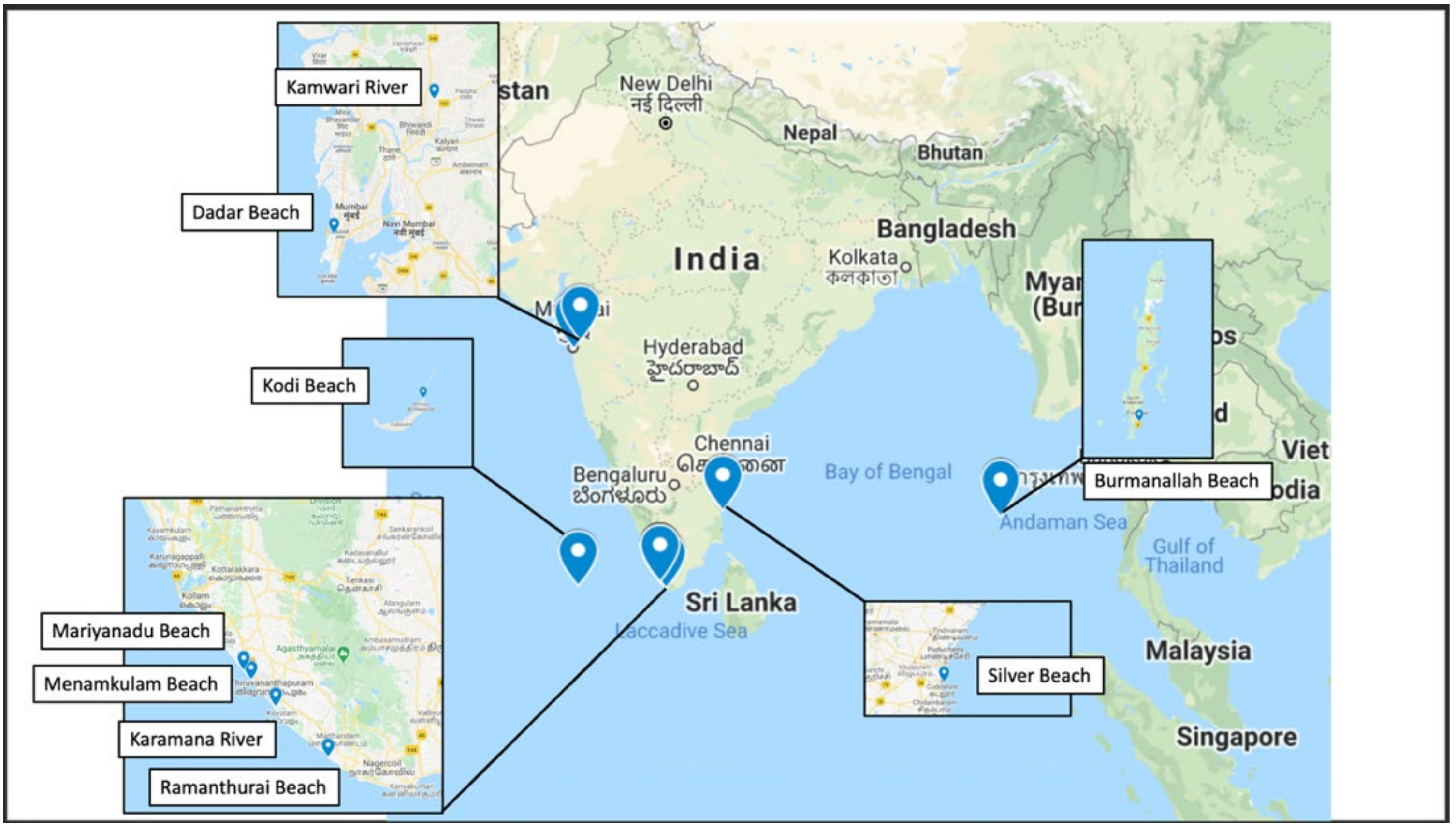
Table i. Cumulative debris tally and weight past material type from 10 collections across India.
Table 1. Cumulative debris tally and weight by material type from ten collections across Bharat.
| Type of Material | Tally (%) | Weight in kg (%) |
|---|---|---|
| Plastic | 27,769 (83.0%) | 343.39 (57.3%) |
| Metallic | 832 (ii.49%) | 32.86 (ane.94%) |
| Glass | 468 (1.40%) | 76.34 (v.48%) |
| Rubber | 154 (0.46%) | 11.64 (iv.92%) |
| Processed trees | 1354 (4.04%) | 11.75 (3.99%) |
| Material, fabric, shoes | 1360 (iv.06%) | 69.8 (12.7%) |
| Natural materials left by humans | 1105 (3.thirty%) | 23.89 (11.half dozen%) |
| Mixed and other materials | 432 (1.29%) | 29.48 (1.96%) |
| Total | 33,474 | 599.15 |
Tabular array 2. Site area, total droppings per site, and collection density with Clean Coast Alphabetize rating.
Table 2. Site area, total droppings per site, and collection density with Clean Declension Index rating.
| Site | Date | Area (10002) | Tally | Weight | Debris Density by Count (Pieces/thousand2) | Clean Declension Index Rating | Debris Density by Weight (g/mtwo) |
|---|---|---|---|---|---|---|---|
| Menamkulam | 19 March 2019 | 2500 | 7420 | 43.five | 2.97 | Extremely dirty | 17.iv |
| Menamkulam | 12 June 2019 | 2000 | 6653 | 106.5 | three.32 | Extremely dirty | 53.25 |
| Karamana | 12 June 2019 | 500 | 1931 | 97.6 | three.86 | Extremely dirty | 195.2 |
| Kodi Embankment | 5 July 2019 | 2240 | 13,541 | 74.3 | 6.05 | Extremely dirty | 33.2 |
| Burmanallah Embankment | 21 September 2019 | 5000 | 3135 | 325.ten | 0.63 | Dirty | 65.0 |
| Silver Beach | 21 September 2019 | 1500 | 2158 | 22.one | i.44 | Extremely dirty | fourteen.7 |
| Ramanthurai Beach | 23 September 2019 | thousand | 381 | 17.nine | 0.38 | Moderate | 17.nine |
| Dadar Beach | 14 October 2019 | 700 | 519 | 5.55 | 0.74 | Muddied | 7.93 |
| Kamwari River | 24 October 2019 | 500 | 677 | 28.iii | 1.35 | Extremely dirty | 56.half dozen |
| Mariyanadu Beach | 2 January 2020 | 900 | 1488 | 6.23 | 1.65 | Extremely dirty | half-dozen.92 |
| Publisher's Note: MDPI stays neutral with regard to jurisdictional claims in published maps and institutional affiliations. |
© 2022 by the authors. Licensee MDPI, Basel, Switzerland. This article is an open access article distributed under the terms and conditions of the Artistic Commons Attribution (CC Past) license (https://creativecommons.org/licenses/by/four.0/).
0 Response to "Bein Sports and Martial Arts for Kodi 173 Free Download"
Post a Comment